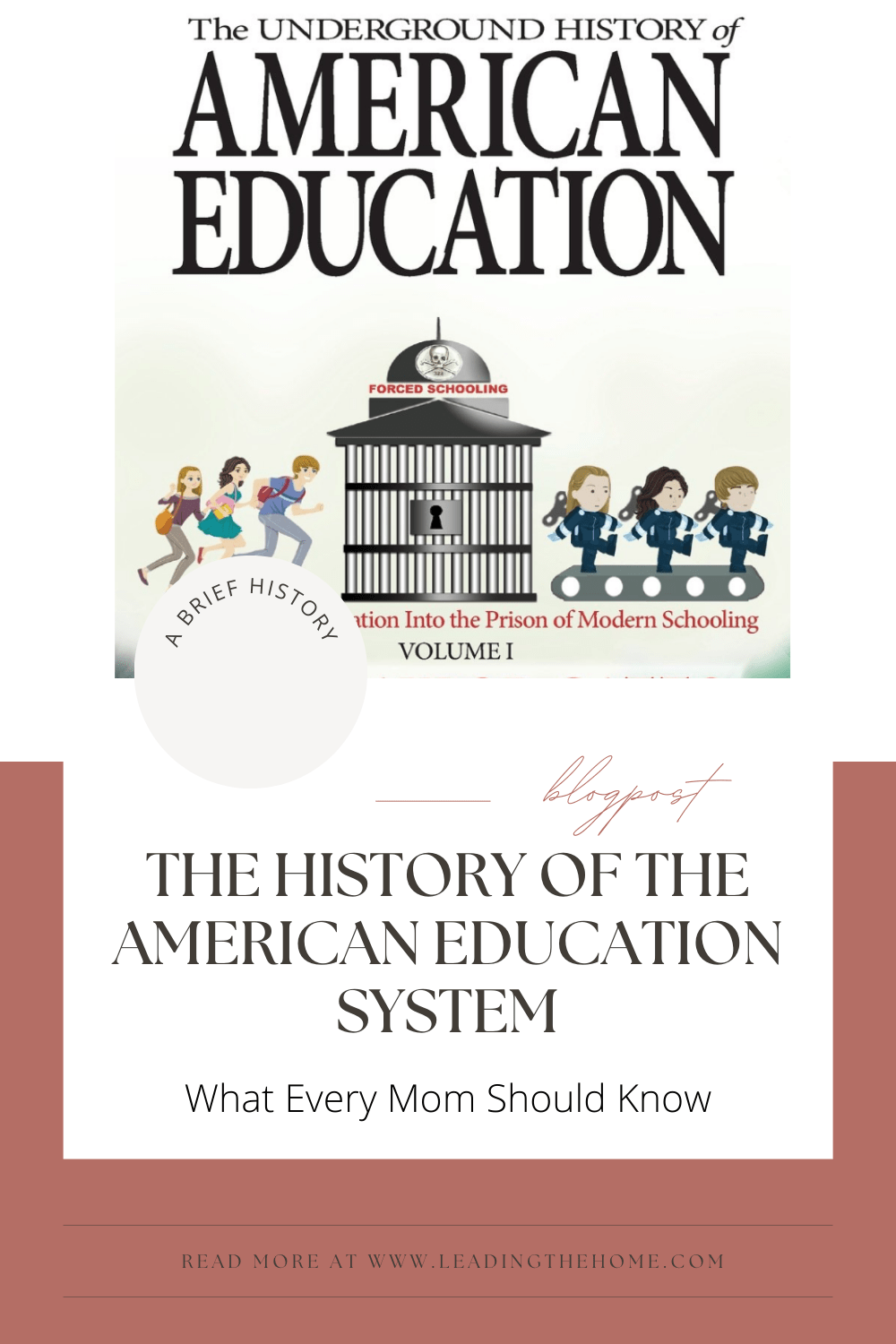
As moms, we all want the best for our children. We dream of giving them every opportunity to grow, learn, and become the best versions of themselves. But as we watch our kids come home after a long day at school, only to face hours of homework, many of us are starting to question whether this system is truly what’s best for them. With so little time left for family, play, or pursuing their own interests, it’s worth asking how much we really know about the system that shapes their minds and futures. I recently dove into The Underground History of the American Education System by John Taylor Gatto, and it opened my eyes to the history behind how our schools came to be. I wanted to share some of what I learned with you—not to sway your opinion, but to give you the information you might find helpful as you make decisions about your children’s education.
A Look Back: Education Before Public Schools
In the early days of our country, education wasn’t as structured as it is now. Families, churches, and small communities taught children what they needed to know—reading, writing, arithmetic, and a lot of practical skills that were important for everyday life. Education was very much a family and community affair, with a focus on preparing kids for the real world, whether that was working on the farm, learning a trade, or managing a household.
The Shift to Compulsory Education
Things began to change in the mid-1800s when the idea of compulsory education took hold. The goal was to create a system where all children could receive an education, which on the surface, sounds like a wonderful idea. Horace Mann, a key figure in this movement, believed that education could be the great equalizer—a way to ensure that every child had a chance to succeed in life.
But as John Taylor Gatto explains in his book, there was more going on behind the scenes. The push for mandatory schooling wasn’t just about educating kids; it was also about shaping them into what society needed at the time. The growing industrial economy required workers who could follow directions, stick to a schedule, and perform repetitive tasks. The new school system was designed to help mold children into these roles.
The Influence of the Prussian Model
One of the most significant influences on the American education system was the Prussian model of education. This system, which came from Germany, emphasized discipline, obedience, and efficiency. It was appealing to American reformers who wanted to create a more structured and standardized education system. The idea was to produce citizens who could be relied upon to follow the rules and fit into the social and economic order.
Gatto points out that while this system helped to create a more orderly society, it also tended to suppress individual creativity and critical thinking. The focus was more on making sure everyone learned the same things in the same way, rather than encouraging kids to think for themselves or explore their unique interests and talents.
Standardization Takes Hold
As time went on, the American education system became even more standardized. Graded classrooms, standardized testing, and a national curriculum became the norm. While this made education more consistent across the country, it also meant that children were often treated more like numbers than individuals.
Gatto’s book highlights some of the downsides of this approach. When education is overly standardized, it can sometimes stifle creativity and independent thought. Instead of encouraging kids to ask questions and think critically, the system often pushes them to memorize facts and follow the rules.
Where We Are Today
Today’s education system has its strengths and weaknesses. It has made it possible for millions of children to learn and grow, but it also faces many challenges. Issues like the achievement gap, resource shortages, and the pressure of standardized testing are real concerns for many parents.
As I read The Underground History of the American Education System, I found myself questioning the purpose of education. Is it just about making sure our kids can pass tests and get into college? Or is it about helping them become independent, thoughtful, and creative individuals? These are questions I think every mom should consider as we guide our children through their educational journeys.
Book Recommendation: The Underground History of the American Education System by John Taylor Gatto
If you’re interested in learning more about how our education system came to be, I highly recommend The Underground History of the American Education System by John Taylor Gatto. Gatto, who was once named New York State Teacher of the Year, offers a deep dive into the history of American schooling. His book is well-researched and thought-provoking, and it might just give you a new perspective on the choices we have as parents when it comes to our children’s education.
Final Thoughts
As moms, we have the responsibility to make informed decisions about our children’s education. By understanding the history and purpose behind the school system, we can better navigate the choices available to us. Whether you choose public school, homeschooling, or another educational path, it’s important to know where these systems come from and how they might impact our children’s future.
You’ve got this, mama. Keep going, and don’t forget to breathe.





 Leading the Home
Leave a comment